The Grey Matter Guide to Problem-Centric Messaging in B2B Marketing

Most B2B messaging sounds like everyone else’s. Learn how to build problem-centric messaging that actually resonates with buying committees and closes deals.

 Tony Bradberry
Most B2B messaging sounds like everyone else’s. Learn how to build problem-centric messaging that actually resonates with buying committees and closes deals.
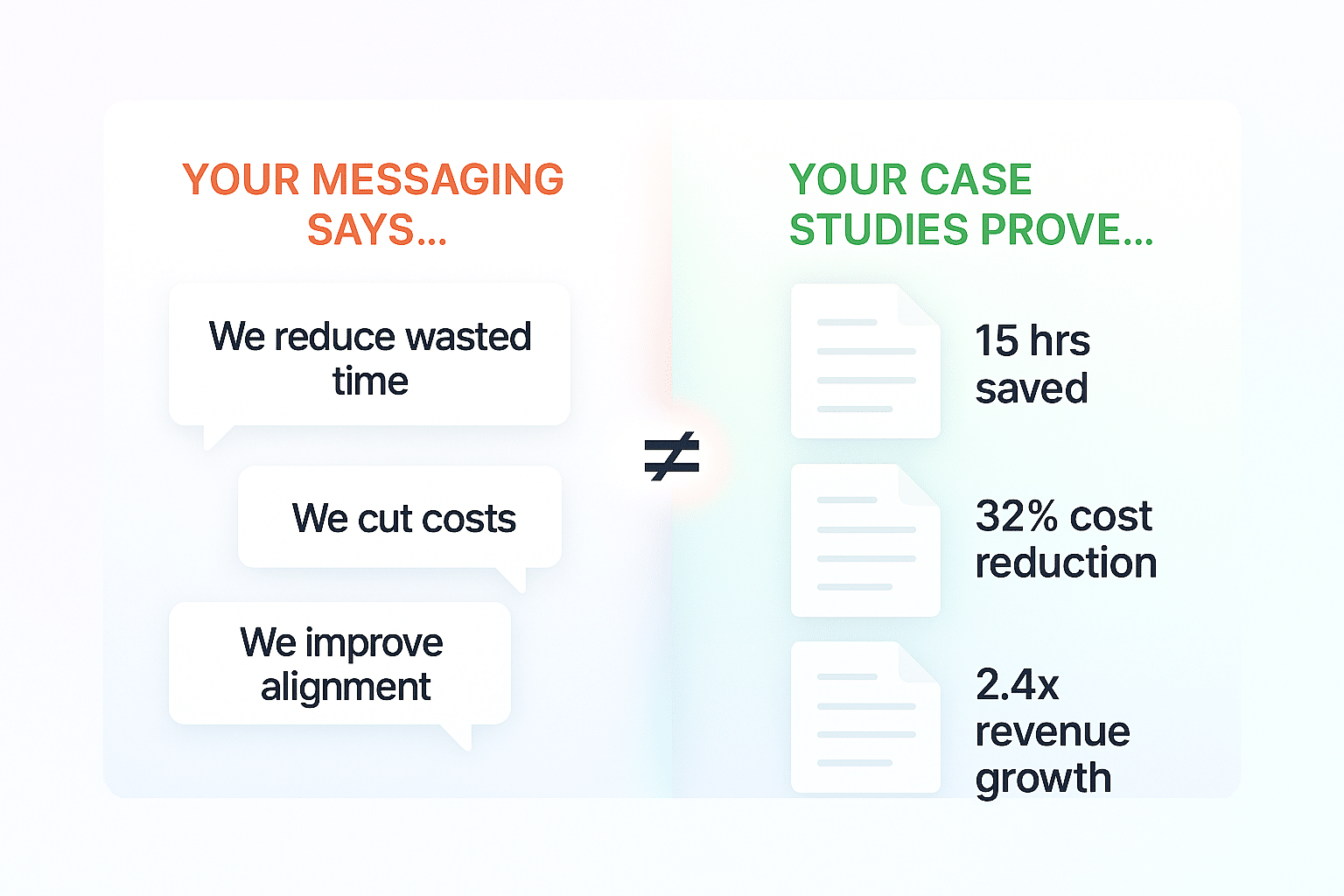
Your champion just sent another “checking in” email. Three weeks since the demo. Finance needs more proof. IT has questions. Operations wants implementation details. The deal that should have closed last quarter is still sitting in limbo. While each stakeholder brings different concerns to the table, there are five universal problems that nearly everyone in that buying committee shares. When you can frame your solution around these shared concerns—wasted time, rising costs, risk exposure, lack of visibility, and missed growth opportunities—you stop forcing your champion to translate between priorities and give them a common language that moves the entire group toward action.

Your champion just sent another “checking in” email. Three weeks since the demo. Finance needs more proof. IT has questions. Operations wants implementation details. The deal that should have closed last quarter is still sitting in limbo. While each stakeholder brings different concerns to the table, there are five universal problems that nearly everyone in that buying committee shares. When you can frame your solution around these shared concerns—wasted time, rising costs, risk exposure, lack of visibility, and missed growth opportunities—you stop forcing your champion to translate between priorities and give them a common language that moves the entire group toward action.

Your champion just sent another “checking in” email. Three weeks since the demo. Finance needs more proof. IT has questions. Operations wants implementation details. The deal that should have closed last quarter is still sitting in limbo. While each stakeholder brings different concerns to the table, there are five universal problems that nearly everyone in that buying committee shares. When you can frame your solution around these shared concerns—wasted time, rising costs, risk exposure, lack of visibility, and missed growth opportunities—you stop forcing your champion to translate between priorities and give them a common language that moves the entire group toward action.

Your champion just sent another “checking in” email. Three weeks since the demo. Finance needs more proof. IT has questions. Operations wants implementation details. The deal that should have closed last quarter is still sitting in limbo. While each stakeholder brings different concerns to the table, there are five universal problems that nearly everyone in that buying committee shares. When you can frame your solution around these shared concerns—wasted time, rising costs, risk exposure, lack of visibility, and missed growth opportunities—you stop forcing your champion to translate between priorities and give them a common language that moves the entire group toward action.

Most B2B companies jump straight to features and integrations, sounding exactly like every competitor. Problem-centric messaging flips this sequence—starting with buyer pain points to build trust, align stakeholders, and create urgency. Learn why leading with problems consistently outperforms feature-first communication.

Nobody makes B2B buying decisions alone anymore. The average purchase involves 6-10 stakeholders with different priorities. Your messaging tries to speak to all of them at once—which means it speaks to none of them effectively. Here’s how to build a problem-persona matrix that actually drives consensus.

Most B2B messaging sounds exactly like the competition. Feature-heavy, generic, and forgettable. These seven mistakes kill deals before they start—and how to fix them.

Most B2B marketing plans look impressive in January, start showing cracks by March, and are completely ignored by June. The problem isn’t execution—it’s that they’re built on fundamentally broken assumptions about tactics instead of revenue outcomes.

Your marketing dashboard shows 100 new leads this month, but deals keep stalling in your funnel. The problem isn’t lead quality or sales follow-up—it’s that you’re treating human beings like database entries instead of helping them navigate complex buying decisions.