Strategy, frameworks, and the analysis behind B2B pipeline that compounds.

Google I/O 2026 Just Rewrote the Search Playbook. Here's What B2B Marketers Should Actually Do About It.
Google made AI Mode the default Search experience this week. The 25-year-old ten blue links interface that the entire B2B search playbook was built around is no longer the default. Here's what changed, what it breaks, and what B2B marketers should do about it right now.

Your Sales Team Is Sitting on Your Best Marketing Data (And None of It’s Being Captured)
Your sales team talks to buyers every day. They hear the objections, competitor mentions, and deal signals that tell you what buyers actually care about. In many B2B companies, none of that gets captured in a usable way. Here’s why CRM strategy plus AI fundamentally changes how marketing and sales operate together.
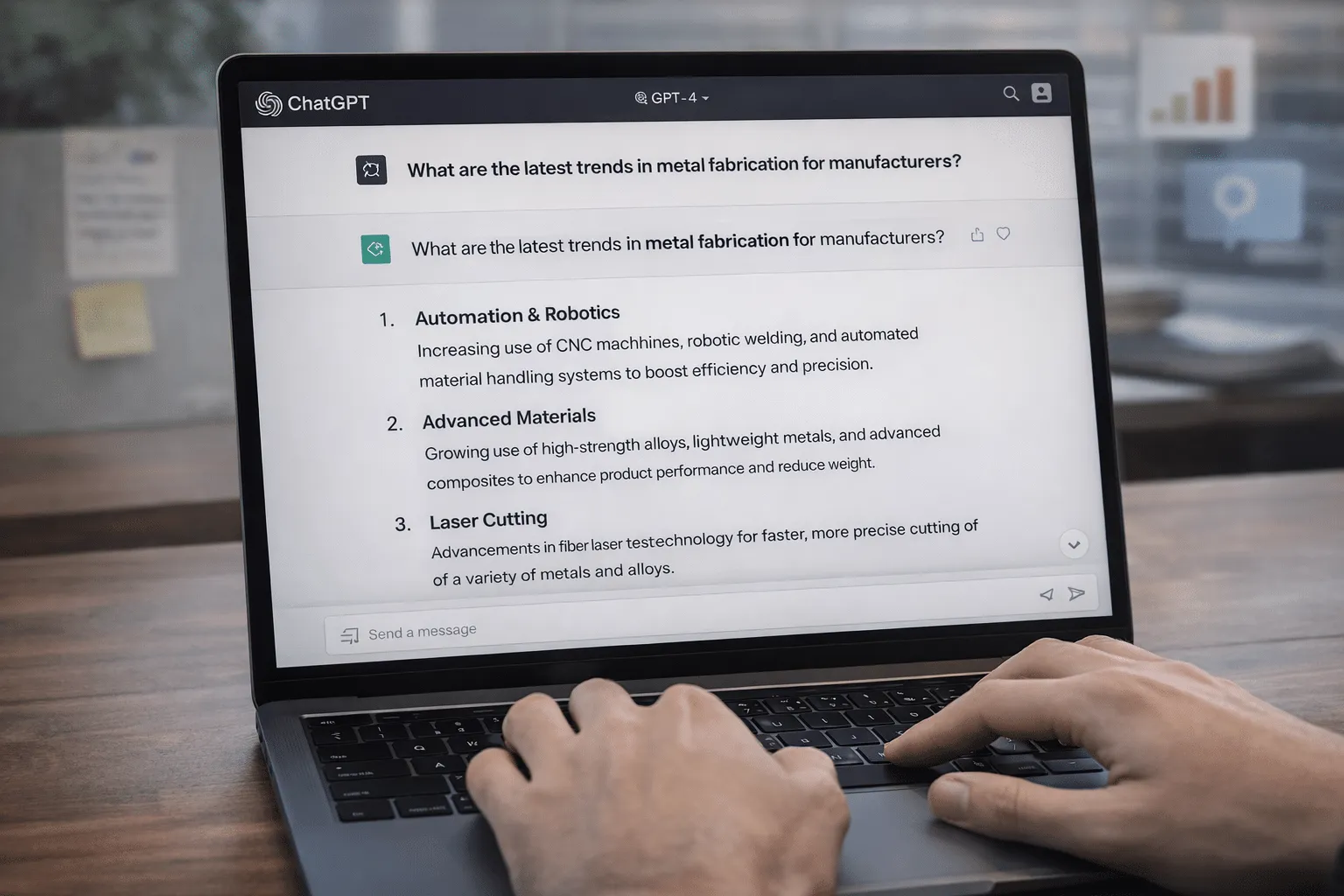
How to Test If Your B2B Company Shows Up in AI Search (And Why Most Don’t)
Most B2B companies track Google rankings but have no idea whether they show up when buyers ask ChatGPT or Perplexity about the problems they solve. Here’s how to run a directional agentic search visibility test yourself in one afternoon, no tools or agency required.

How AI Search Is Changing Manufacturing Discovery (And What You Need to Do Now)
Your prospect opens ChatGPT and types: “What’s causing premature bearing failure in high-temperature industrial applications?” This is AI search manufacturing discovery in action, and it’s rewriting the rules of how buyers find you. They don’t visit Google. They don’t click through ten blue links. They get a compiled answer from multiple sources, complete with technical … Read more

The Tradeshow System Manufacturers Are Missing: From Attendee List to Closed Deal
Here’s how most manufacturers run a tradeshow. They spend $30,000 to $80,000 on booth space, travel, and collateral. Their sales team shows up and waits for people to walk by. Everyone flies home with a stack of business cards. Three months later, someone asks what came out of it. Nobody has a clear answer because … Read more

SEO for Manufacturers: How to Get Found by the Buyers Who Are Already Searching
Your ideal buyers are Googling “precision CNC machining supplier” and “custom metal fabrication company” right now. They’re comparing options, reading content, building shortlists. All before they ever pick up the phone. And your website? Nowhere in sight. Most manufacturing companies are still running the same playbook they’ve used for decades: trade shows, referrals, and a … Read more
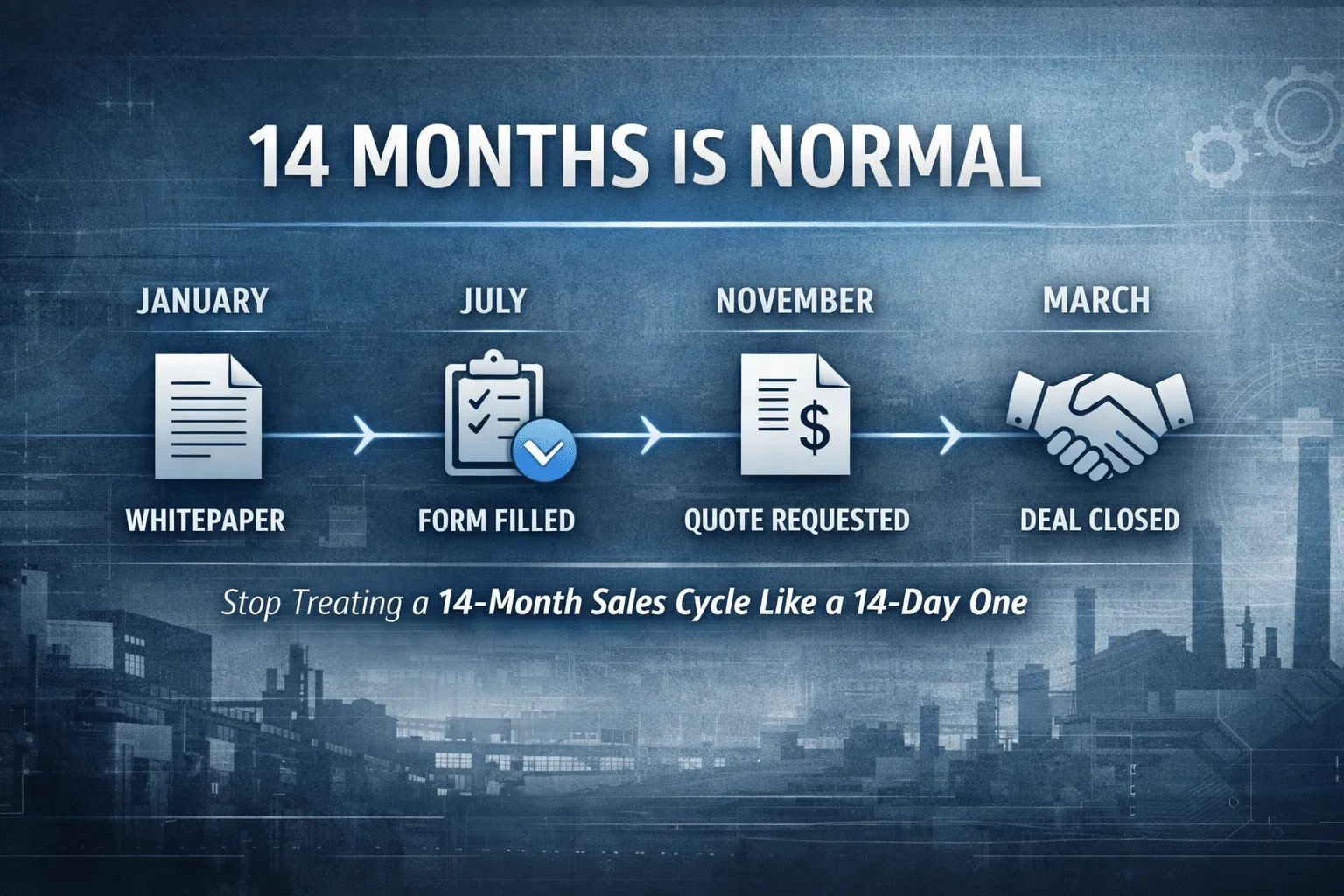
The Long Sales Cycle Problem: Content Strategy for Technical B2B Buyers
Manufacturing sales cycles run 6-18 months with multiple stakeholders evaluating technical fit, vendor reliability, and business impact. Most companies only create content for engineers in the evaluation stage, missing early research and the multi-stakeholder reality. Learn how to build content strategy that works throughout the long buyer journey.

From Specs to Solutions: How Manufacturers Should Actually Market Their Capabilities
“We’re not selling widgets.” Manufacturing companies swing between two extremes: listing specs like commodities or claiming everything is custom without explaining what problems they solve. Both approaches fail. Learn how to position around the problems you solve and the failures you prevent, not just technical capabilities.

Why Marketing and Sales Alignment Matters More in Manufacturing
Manufacturing companies often treat marketing as “the tradeshow people” while sales owns revenue relationships. This separation costs you deals you’ll never see, allows competitors to steal share invisibly, and turns two functions into adversaries. Here’s why marketing and sales alignment matters more in manufacturing than most companies realize.

B2B Website Performance Guide: Benchmarks, Best Practices, and Conversion Strategy
Most B2B messaging sounds like everyone else’s. Learn how to build problem-centric messaging that actually resonates with buying committees and closes deals.

How B2B Buyers Actually Research Vendors: What Your Website Must Deliver
Buyers check your website, then immediately search for reviews. They read your LinkedIn posts to see if your content matches your claims. They ask about you in private Slack channels you’ll never see. Your website is competing against everything else buyers can find about you. Most B2B companies build sites as if they control the research process. They don’t. Buyers control it, and they’re using your website as one input among many.

How to Audit Your B2B Website for Conversion Problems
Your website isn’t converting, so you guess at fixes. New homepage hero. Different CTA copy. Maybe a redesign. You’re making changes based on intuition instead of evidence. An effective website audit isn’t complicated—it requires a systematic approach to identifying where your site creates friction and where buyers actually drop off. Not aesthetics. Not best practices. Actual friction that kills actual deals.