B2B Content Marketing Strategy for 2026: Build for Buyers and AI Search
A B2B content marketing strategy built for the AI search era: tie content to buyer problems, demand generation, and pipeline instead of volume nobody uses.
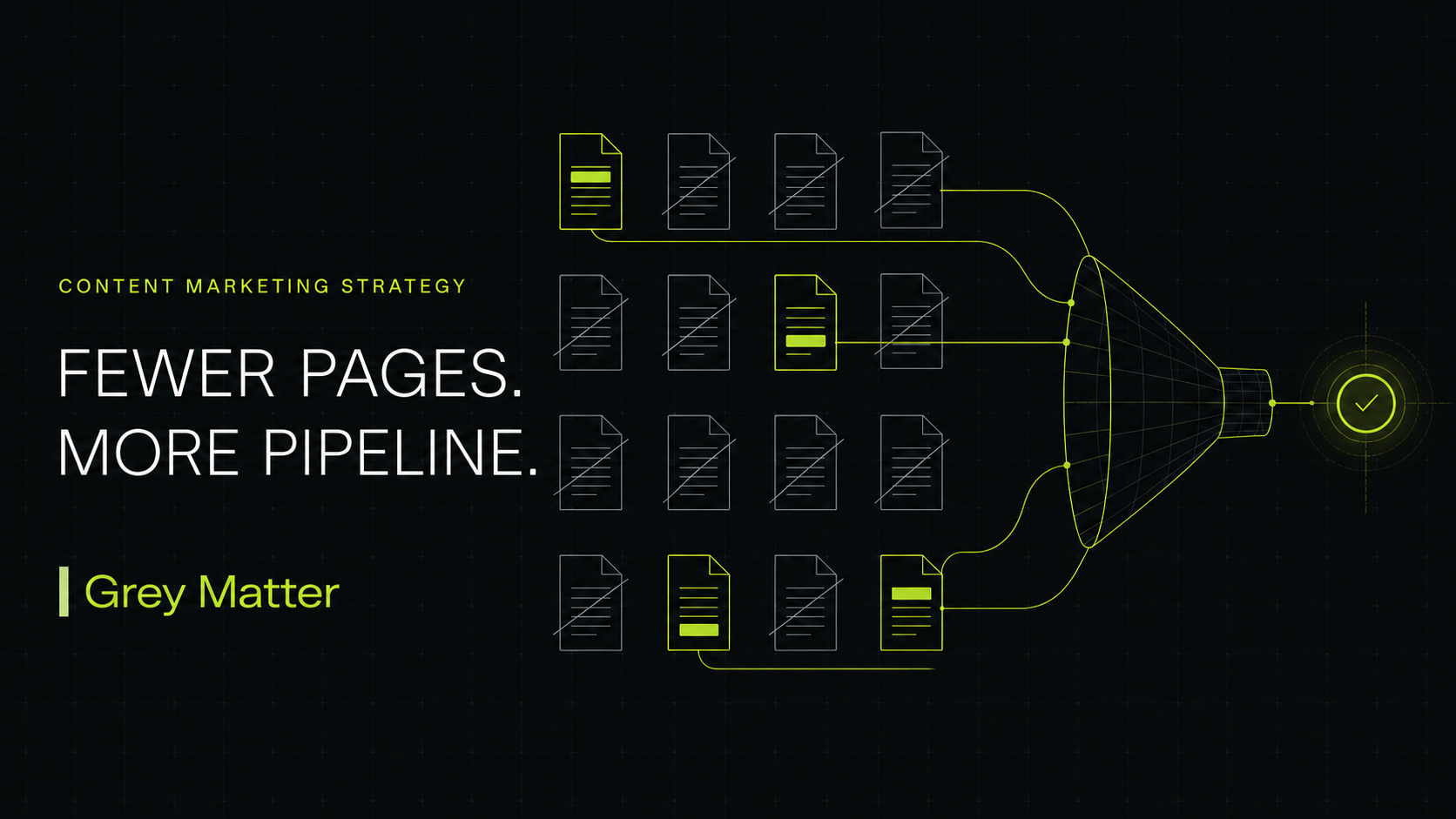
Your team published forty blog posts last year. Sales used four of them. The rest sit on a resource page nobody visits.
That is not a production problem. It is a strategy problem, and it is common. Forrester has found that about 65% of B2B content assets go unused, most of it because it was built around what the company wanted to say instead of what a buyer needed to decide. Now the ground is shifting again. Your buyers have started researching in ChatGPT and Perplexity before they ever open Google, and most B2B content strategies are still built to feed a search box those buyers are walking away from.
Here is what a B2B content marketing strategy has to do in 2026, why the volume-first version fails, and a framework for building content that buyers use, AI engines cite, and your pipeline actually reflects.
What Is a B2B Content Marketing Strategy?
A B2B content marketing strategy is your plan for creating and distributing content that helps business buyers research, trust, and choose you. It maps each piece to a specific buyer problem and a stage in a months-long, committee-driven decision. The goal is not traffic or published volume. It is qualified pipeline and closed revenue, and in 2026 that means being both the page a buyer reads and the source an AI engine quotes.
That last part is new. For fifteen years the job was to rank. Now content has two audiences: the human comparing vendors and the model summarizing the market for them.
Why Most B2B Content Marketing Strategies Fail
Most strategies fail because they optimize for output, not outcomes. The plan is a publishing calendar. The metric is posts shipped and sessions earned. Neither one tells you whether a single deal moved.
The root cause is starting with topics and keywords instead of buyer problems. A keyword tool tells you “b2b content marketing strategy” gets 1,900 searches a month. It does not tell you which of those searchers has a budget, a committee, and a problem you solve. So teams chase volume, publish broadly, and end up with forty posts that each rank for a little and sell for nothing. That is how you get to Forrester’s 65%.
The second failure is sprawl. Ten thin posts on nearly the same subject do not add up to authority. They split it. Both search engines and AI models reward depth and consistency, the same way B2B SEO rewards topic clusters over orphan posts, and a dozen shallow articles on “content marketing tips” signal neither. One well-built page on the problem you own will out-rank and out-cite the whole pile.
What Changed: Your Buyers Research Through AI Now
The buying behavior underneath your strategy has moved. In G2’s 2026 research, 51% of B2B software buyers now start their vendor research in an AI chatbot, overtaking Google as the first stop for the first time. They ask the model to compare options, and it answers by pulling from content across the web, much of it before a buyer ever lands on your site.
This is not happening in a vacuum. Gartner found 61% of B2B buyers prefer a rep-free buying experience, and the typical buying group runs 6 to 10 people who spend only about 17% of the journey talking to suppliers. The rest is independent research, and that research increasingly runs through an AI layer that reads your content and decides whether to mention you.
So content now has two jobs. It still has to earn the ranking and the click. And it has to be structured cleanly enough that a model can lift a clear answer and attribute it to you. That second job is generative engine optimization, and it does not replace content marketing. It raises the bar on it.
How to Build a B2B Content Marketing Strategy That Drives Pipeline
Six moves separate a content program that funds the business from one that just fills a calendar.
Start with buyer problems, not topics. Sit with sales. List the specific questions buyers ask at each stage, in their words, not yours. “What’s causing premature bearing failure at high temperatures” is a buyer problem. “Our product line” is not. Every planned piece should trace back to a real question a real buyer types or asks out loud.
Map content to the committee and the journey. With 6 to 10 people evaluating you, one page cannot serve everyone. The technical evaluator wants specs. The economic buyer wants a business case. The end user wants to know it will not wreck their quarter. Build for awareness, consideration, and decision, and for each role in the room, then link those pieces into a path.
Consolidate around the problems you win. This is where most B2B libraries need surgery, not more posts. Pick the three or four problems you solve better than anyone, build one strong canonical page for each, and merge or redirect the thin legacy articles into it. Depth on a few owned problems beats breadth across many. If you have ten overlapping posts on content marketing, the fix is one page that earns the term, not an eleventh.
Structure every asset for extraction and citation. Lead with a direct 40-to-60-word answer. Use question-shaped headers that mirror how buyers search. Write claims as clean, standalone facts, and back the important ones with a credible source, because corroboration is what makes an AI engine trust you enough to quote you. Google has confirmed that optimizing for its AI features is still ordinary, well-structured SEO, so this is not a separate discipline. It is doing the fundamentals well enough to matter.
Wire content into demand generation and lead generation. Content is the engine, not the destination. Some pieces earn attention and feed B2B demand generation at the top of the funnel. Some capture intent and become the backbone of your B2B lead generation strategies. Match each piece to the channels where your buyers spend their time, because the best asset does nothing if it never reaches the committee. The mistake is gating everything, which strangles the awareness content that feeds the AI engines, or gating nothing, which never converts interest into a name. Decide which each asset is for.
Measure pipeline, then prune. Connect content to your CRM. Track which pieces earn traffic, which convert readers into leads, and which show up in closed deals. Then act on it: kill or merge the content that never gets used, and pour resources into the few pages that move revenue. A content strategy without a pruning step is how you end up back at forty posts and Forrester’s 65%.
What Good Looks Like
Good B2B content is easy to spot once you compare it to the default.
The default publishes “5 Content Marketing Tips for Manufacturers,” a 700-word post that says nothing a buyer could not guess. Good content publishes one deep page on how to reduce scrap rate on a specific line, answers the question in the first paragraph, cites its sources, and links a technical buyer to the spec sheet and an economic buyer to an ROI comparison.
The default measures posts published and sessions earned. Good content measures how much pipeline the library created and how much of it closed.
The default has forty posts, each ranking for a little. Good content has a handful of pages that own their problems, get cited by the models, and show up by name in sales conversations. Same effort. Opposite result.
For a look at how this plays out across channels, see best B2B channel marketing strategies and how each channel fits into the broader content system.
What This Costs You to Ignore
Every quarter you spend publishing volume is a quarter your buyers spend researching without you. They are doing the bulk of the work before they contact anyone, more of it inside AI tools, and the content they find during that research is your pitch whether you designed it to be or not. If your pages are thin, keyword-first, and impossible to quote, the model summarizes the market and leaves you out of it.
You can keep filling a calendar. Or you can build a B2B content marketing strategy around the problems you win, structure it so buyers and engines both trust it, and connect it to the pipeline it creates. The companies that own their category in 2026 will be the ones that stopped counting posts and started counting deals.
Want to know whether your content is building pipeline or just filling a library? Take a closer look at how we approach B2B content marketing, put your own library against it, and find the handful of pages worth betting on.
Frequently Asked Questions
What is a B2B content marketing strategy?
A B2B content marketing strategy is a plan for creating and distributing content that helps business buyers research, trust, and choose your company. It ties each piece to a specific buyer problem and a stage in a committee-driven decision, and measures success by qualified pipeline and revenue rather than traffic or the number of posts published.
How is B2B content marketing different in the AI search era?
Buyers now start much of their research in AI tools like ChatGPT and Perplexity, so content has two jobs: earn the traditional ranking and be structured clearly enough for a model to quote and attribute. That means leading with direct answers, using question-shaped headers, and backing claims with credible sources so AI engines trust and cite you.
How does content marketing support B2B demand generation and lead generation?
Content is the fuel for both. Awareness content builds recognition and feeds B2B demand generation across your market, while intent-driven and gated assets become the backbone of your B2B lead generation strategies by capturing and nurturing interest. The key is deciding what each asset is for instead of gating everything or nothing.
How much content should a B2B company publish?
Consistency beats volume. One high-quality, strategically relevant piece a week, roughly four substantial pieces a month, outperforms ten thin posts. The right number is however many pages you can make deep, buyer-focused, and genuinely useful, not a quota that produces content nobody uses.
How do you measure a B2B content marketing strategy?
Connect content to your CRM and measure the pipeline it creates and how much of it closes, not keyword rankings or raw sessions. Track which pieces earn traffic, which convert readers into leads, and which influence closed deals, then prune or merge the content that never gets used.
Should you consolidate or keep publishing new content?
If you already have several thin posts on the same subject, consolidate. Merge or redirect them into one strong canonical page that can own the term and earn AI citations. Depth on a few problems you win beats breadth across many, for both traditional search and AI engines.
Want a strategy built around this? Get a free B2B marketing diagnostic →