Manufacturing Marketing Strategy: How to Build One That Drives Pipeline, Not Activity
A manufacturing marketing strategy should build pipeline, not activity. Here's the framework: positioning, buyer-intent content, demand capture, and revenue measurement.
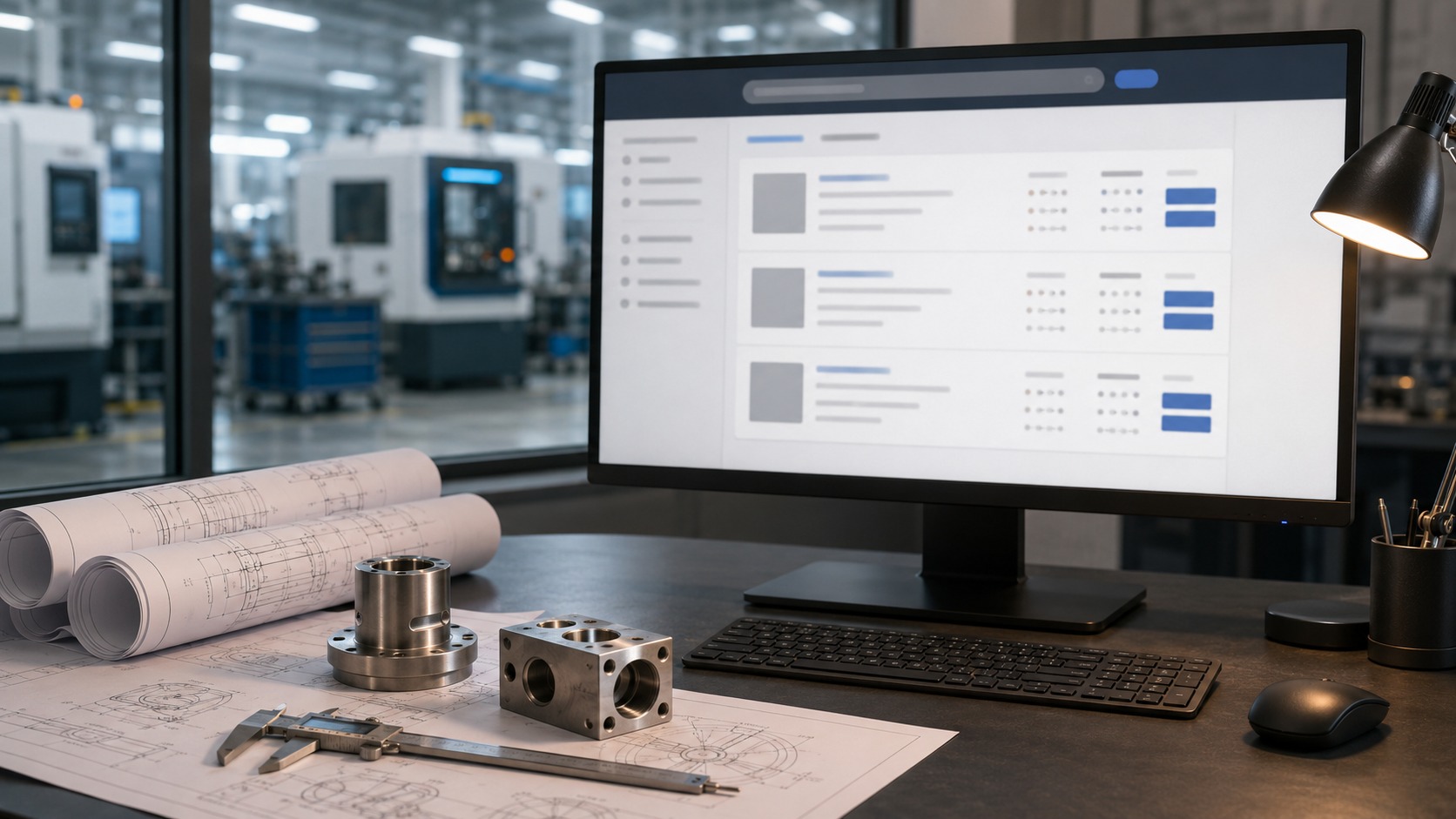
Your best prospect spent three months choosing their next supplier. They read comparison articles, pulled two competitors’ spec sheets, watched a teardown on YouTube, and asked ChatGPT who leads in your category. Then they built a shortlist and requested three quotes.
You weren’t one of them. Nobody on your sales team ever knew the opportunity existed.
That is exactly what a manufacturing marketing strategy is supposed to prevent. Most don’t, because most aren’t strategies. They’re a list of activities: a booth at the spring show, a quarterly email blast, a website that got its last real update in 2019, and a LinkedIn page nobody touches. Activity is easy to fund and easy to point to. It just doesn’t put you on the shortlist.
Here’s how to build a manufacturing marketing strategy that does.
What Is a Manufacturing Marketing Strategy?
A manufacturing marketing strategy is the plan for how your company gets discovered, evaluated, and shortlisted by industrial buyers before they ever contact sales. It defines who you serve, the problems you solve, the content that proves you solve them, and the way you turn search demand and buyer research into qualified pipeline.
The test is simple. A real strategy connects every activity to a revenue outcome. A list of tactics connects to a calendar. If you can’t draw a line from what marketing does this quarter to a quote request next quarter, you have activities, not a strategy.
The Role of Marketing in Manufacturing Has Changed
For decades the role of marketing in manufacturing was narrow: print the catalog, book the booth, hand sales a stack of badge scans it mostly ignored. Sales owned the relationship. Marketing owned the brochure.
That model broke, and the data says so. B2B buyers now spend just 17% of their entire purchase journey meeting with potential suppliers, according to Gartner. When they’re weighing several vendors at once, any single sales rep gets 5% to 6% of their attention. And 67% of B2B buyers told Gartner in 2026 that they prefer a rep-free buying experience, up from 61% the year before.
Do the arithmetic. If more than 80% of the decision happens without your sales team in the room, then marketing is your presence in the room. The role of marketing in manufacturing is no longer to support sales. It’s to be the company buyers find, trust, and shortlist during the large majority of the decision your reps never see. Sales still closes. But marketing decides whether you make the list that sales gets to close from.
That reframe changes what belongs in the strategy. You’re not building awareness for its own sake. You’re engineering discovery and trust at the exact moments a buyer is forming a shortlist you can’t attend.
Why Most Manufacturing Marketing Strategies Fail
Pull up the average manufacturer’s plan and you’ll usually find the same four problems.
They confuse activity with strategy. Ten tactics running in parallel, none tied to a number. Nobody can say which one produced a quote.
They talk about the company instead of the buyer’s problem. Pages full of tonnages, tolerances, and certifications, with nothing about the production failure the buyer is trying to prevent. Buyers don’t search for your capabilities. They search for their problem, then look for a supplier who clearly understands it. If your marketing leads with specs, reposition it around the problems you solve.
They run sales and marketing as separate departments. Marketing books the shows. Sales works the deals. Neither shares what it learns, so the message a buyer sees online never matches the conversation they have on the phone. In manufacturing, that gap costs you deals you never even see. See how sales and marketing alignment changes that.
They measure the wrong things. Impressions, followers, and website sessions get reported up. Pipeline and revenue don’t. You can’t fix what you don’t measure, and most manufacturers are measuring activity.
Fix those four and the strategy almost builds itself.
The Manufacturing Marketing Strategy Framework
Here’s the sequence we use to build a manufacturing marketing strategy that produces pipeline. Run it in order. Each step makes the next one work harder.
1. Position around the problem, not the spec sheet. Start with the failure your buyer is trying to avoid: the line-down event, the missed compliance audit, the six-month lead time that blows a launch. Then connect your capabilities to that problem. A buyer who reads “we prevent premature bearing failure in high-temperature applications” trusts you faster than one who reads “5-axis machining, ISO 9001.” Walk through how to shift from specs to solutions in our dedicated guide.
2. Map the strategy to a 6 to 18 month buying cycle. Manufacturing decisions are slow and involve engineers, procurement, and finance, each searching for different things. Most companies only publish content for the engineer in the final evaluation stage and miss the entire early-research window. Build for the full length of the cycle, not just the moment before the RFQ.
3. Answer the questions your engineers actually get asked. Every technical question your applications team fields on a call is a search query somebody typed first. Turn those into pages. This is the content that ranks in Google and gets your company found by buyers who are already searching. It’s also the content AI search engines pull from when a buyer asks ChatGPT or Perplexity to name suppliers. See our full guide to SEO for manufacturers for the execution details.
4. Capture the demand that already exists before you try to create more. Somewhere between brand campaigns and cold outreach sits the buyer who is searching for exactly what you make, right now. Own those searches first through SEO and targeted paid media. Demand capture pays back faster than demand creation, and in a long-cycle business, faster feedback is how you learn what actually converts.
5. Align sales and marketing around one revenue number. Give both teams the same target and the same definition of a qualified lead. Feed sales the buyer intent marketing sees online. Feed marketing the objections and competitor mentions sales hears on calls. One revenue operation, not two departments trading blame. Our sales and marketing alignment guide for manufacturers covers the operational details.
6. Measure pipeline, not activity. Track marketing-sourced quotes, opportunities, and closed revenue by source and by page. Traffic and rankings are inputs. Report the outputs that finance cares about. When you can attribute a $200,000 order to the technical article that first brought the buyer in, marketing stops being a cost center and becomes a growth engine. Here’s what to measure instead of vanity metrics.
What a Working Manufacturing Marketing Strategy Produces
This isn’t theory. When the strategy is built around buyer problems and measured against revenue, the numbers move.
We helped one industrial manufacturer generate $818K in organic revenue from search alone. A targeted campaign program drove 230% lead growth for another manufacturer. An OEM enclosure maker hit 389% return on ad spend once the paid strategy was pointed at real buyer intent instead of broad terms. The system behind results like these is manufacturing lead generation — capturing demand from search, converting technical buyers, and measuring to revenue.
None of those results came from a bigger booth. They came from a strategy that treated marketing for the manufacturing industry as a pipeline system, not a promotional one.
How to Choose the Right Marketing Channels for a Manufacturer
Channels come last, on purpose. Pick them to serve the strategy, not the other way around. For most manufacturers the pipeline-producing core is a website built to convert, SEO and AI search visibility for the technical and supplier queries buyers use, and paid search to capture high-intent demand immediately. LinkedIn and email nurture the long cycle in between. Tradeshows still earn their place, but only with a follow-up system attached, not as a standalone bet.
The mix matters more than the count. Two channels executed well outperform five channels executed poorly. Choose channels that reach your specific buyers at the moment they’re forming a shortlist, not channels a competitor uses or a vendor sells.
Frequently Asked Questions
What is a manufacturing marketing strategy?
A manufacturing marketing strategy is a plan for getting your company discovered, evaluated, and shortlisted by industrial buyers before they contact sales. It covers who you serve, the problems you solve, the content that proves it, the channels that reach buyers, and the way you turn research and search demand into qualified pipeline. The defining feature is that every activity ties back to revenue.
What is the role of marketing in manufacturing?
Marketing’s role is to be your company’s presence during the roughly 80% of the buying decision that happens without a sales rep. Buyers research independently, compare suppliers online, and build shortlists before reaching out. Marketing makes sure you’re on that shortlist by owning the searches, questions, and comparisons your buyers run early in the cycle.
What are the best marketing channels for the manufacturing industry?
The highest-return channels for most manufacturers are a conversion-focused website, SEO and AI search visibility, and paid search that captures active buyer intent. LinkedIn and email support the long sales cycle, and tradeshows work when paired with a real follow-up system. Choose channels to fit your buyers and your strategy, not because a competitor uses them.
How long does a manufacturing marketing strategy take to work?
Expect early signals in 3 to 6 months and compounding pipeline after 12. Demand-capture tactics like paid search and vertical landing pages can produce leads within weeks, while SEO and content authority build over quarters. The long manufacturing sales cycle of 6 to 18 months means revenue attribution trails lead generation, so measure leading indicators early.
How much should a manufacturer spend on marketing?
Most B2B companies invest somewhere between 5% and 10% of revenue in marketing, with growth-focused firms at the higher end. For manufacturers, allocation matters more than the total. Money spent on positioning, a website that converts, and demand capture returns more than the same money spent on a bigger booth.
How is manufacturing marketing different from other B2B marketing?
The fundamentals overlap, but manufacturing marketing leans harder on technical credibility, vertical-specific positioning, compliance and certification requirements, multi-stakeholder buying groups, and sales cycles that run 6 to 18 months. Generic B2B tactics underperform when they ignore how technical buyers actually research and decide.
The Manufacturers Who Win the Next Cycle Are Building This Now
Your buyers already changed how they buy. They research independently, shortlist quietly, and talk to sales last. The manufacturers taking share right now are the ones whose marketing shows up during that quiet research, answers the real questions, and hands sales a warm, informed buyer instead of a cold badge scan.
The window is still open because most of your competitors are still funding activity and calling it a strategy. That won’t last. Every quarter you wait, someone else claims the searches, the answers, and the shortlist spots your buyers are filling today.
The question isn’t whether manufacturing marketing has moved online. It’s whether your strategy has.
Want to see where your manufacturing marketing strategy stands? Get a free B2B marketing diagnostic and we’ll show you exactly where the pipeline is leaking and what your competitors are doing that you’re not.
Want a strategy built around this? Get a free B2B marketing diagnostic →